Programming your first analog FM codeplug is much easier than configuring DMR. You mainly need the frequency, the repeater offset and, where required, a CTCSS tone.
This guide starts with the most useful 2 m and 70 cm simplex frequencies and then adds a selection of FM repeaters around the Mainz/Rhine-Main area.
The goal is a small and understandable starting codeplug rather than a huge database containing every repeater in Germany.
Default Configuration
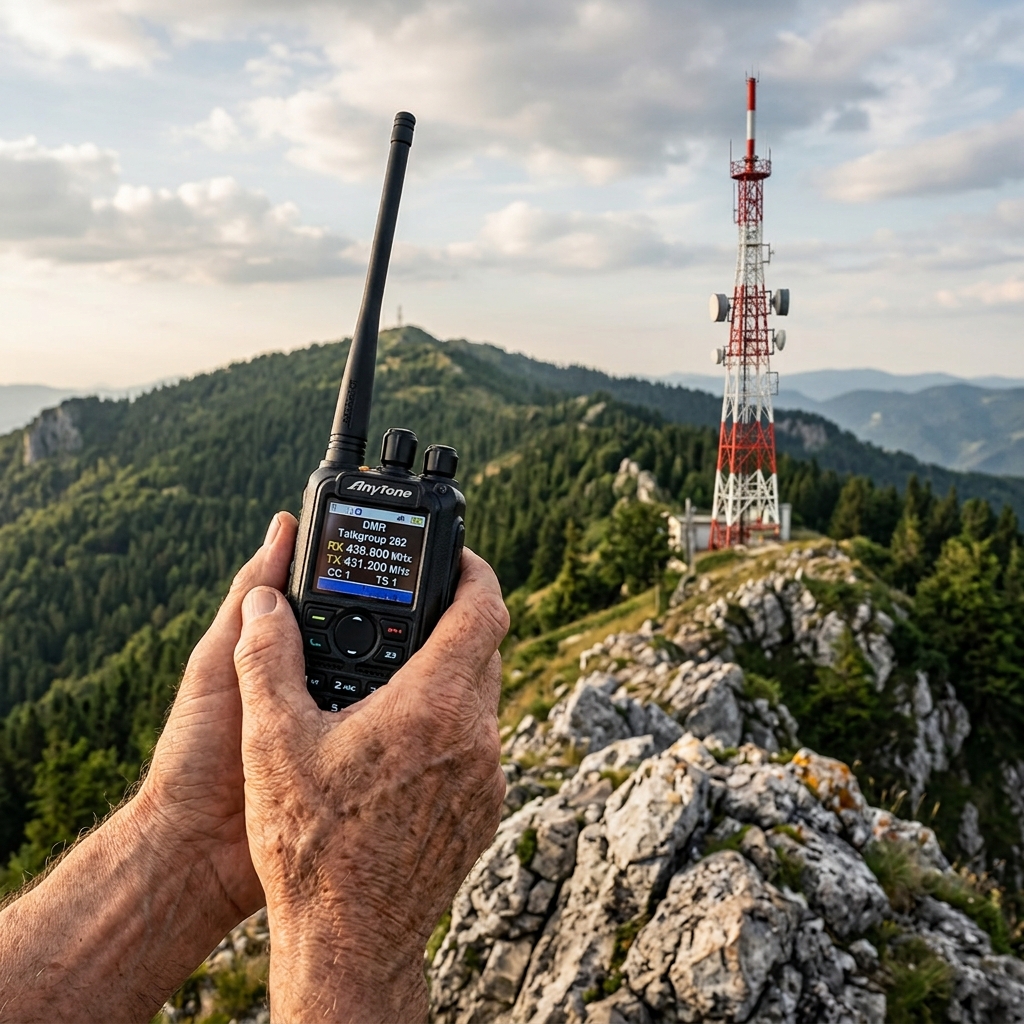
Most radios, including the AnyTone AT-D878UV II Plus, are supplied with a sample configuration. These settings provide a useful starting point, but should be reviewed and adjusted according to your personal requirements and operating preferences.

Simplex FM Frequencies
Simplex means that your radio transmits and receives on the same frequency. No repeater is involved and no frequency offset is required. For normal FM simplex operation, no tone is configured unless specifically required.
2 m FM
The following channels provide a useful basic 2 m simplex section:
| Channel | Frequency |
|---|---|
| SX 2mFM Call 500 | 145.5000 MHz |
| SX 2mFM 5125 | 145.5125 MHz |
| SX 2mFM 5250 | 145.5250 MHz |
| SX 2mFM 5375 | 145.5375 MHz |
| SX 2mFM 5500 | 145.5500 MHz |
| SX 2mFM 5625 | 145.5625 MHz |
| SX 2mFM 5750 | 145.5750 MHz |
| SX 2mFM 5875 | 145.5875 MHz |
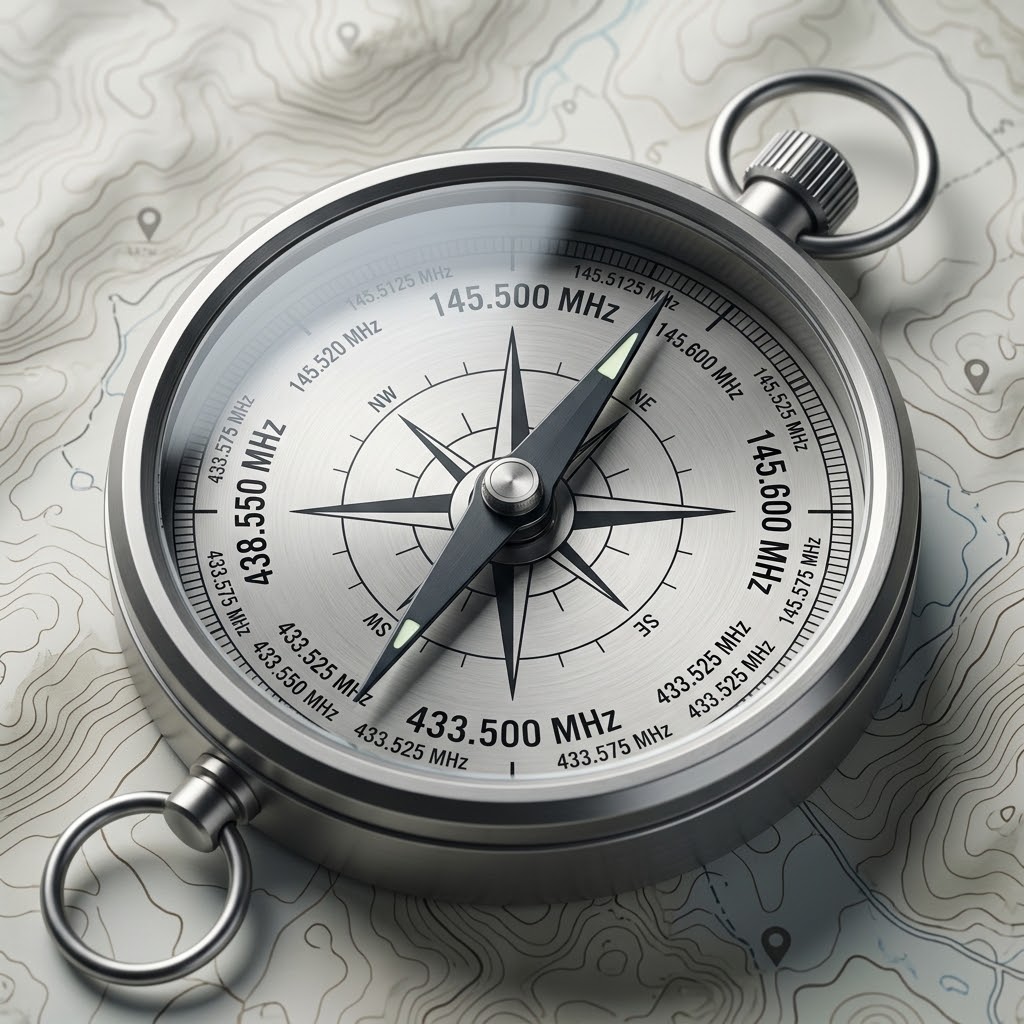
The channels follow the 12.5 kHz narrowband FM raster used in Germany under the IARU Region 1 band plan. Starting at 145.5000 MHz, frequencies progress in 12.5 kHz steps up to 145.5875 MHz (upper edge of the FM simplex segment 145.2125–145.5875 MHz); repeater outputs follow from 145.6000–145.7875 MHz (−600 kHz shift).
145.5000 MHz (“SX 2mFM Call 500”) is the FM calling frequency – used to establish contact, then QSY to a free simplex channel. Always check the current German frequency allocation plan and IARU Region 1 band plan for updates.
For 12.5 kHz spacing, set the AnyTone to “12.5K” (narrowband): max. FM deviation ±2.5 kHz. The IARU Region 1 plan specifies max. occupied bandwidth of 12 kHz (12K0F3E) – a separate spec from the 12.5 kHz channel spacing, not to be confused.
70 cm FM
A similar simplex section can be created for 70 cm.
| Channel | Frequency |
|---|---|
| SX 70FM Call 500 | 433.5000 MHz |
| SX 70FM 0000 | 433.0000 MHz |
| SX 70FM 0125 | 433.0125 MHz |
| SX 70FM 0250 | 433.0250 MHz |
| SX 70FM 0375 | 433.0375 MHz |
| SX 70FM 0500 | 433.0500 MHz |
| SX 70FM 0625 | 433.0625 MHz |
| SX 70FM 0750 | 433.0750 MHz |
| SX 70FM 0875 | 433.0875 MHz |
| SX 70FM 1000 | 433.1000 MHz |
| SX 70FM 1125 | 433.1125 MHz |
| SX 70FM 1250 | 433.1250 MHz |
| SX 70FM 1375 | 433.1375 MHz |
| SX 70FM 1500 | 433.1500 MHz |
| SX 70FM 1625 | 433.1625 MHz |
| SX 70FM 1750 | 433.1750 MHz |
| SX 70FM 1875 | 433.1875 MHz |
| SX 70FM 2000 | 433.2000 MHz |
| SX 70FM 2125 | 433.2125 MHz |
| SX 70FM 2250 | 433.2250 MHz |
| SX 70FM 2375 | 433.2375 MHz |
| SX 70FM 2500 | 433.2500 MHz |
| SX 70FM 2625 | 433.2625 MHz |
| SX 70FM 2750 | 433.2750 MHz |
| SX 70FM 2875 | 433.2875 MHz |
| SX 70FM 3000 | 433.3000 MHz |
| SX 70FM 3125 | 433.3125 MHz |
| SX 70FM 3250 | 433.3250 MHz |
| SX 70FM 3375 | 433.3375 MHz |
| SX 70FM 3500 | 433.3500 MHz |
| SX 70FM 3625 | 433.3625 MHz |
| SX 70FM 3750 | 433.3750 MHz |
| SX 70FM 3875 | 433.3875 MHz |
| SX 70FM 4000 | 433.4000 MHz |
| SX 70FM 4125 | 433.4125 MHz |
| SX 70FM 4250 | 433.4250 MHz |
| SX 70FM 4375 | 433.4375 MHz |
| SX 70FM 4500 | 433.4500 MHz |
| SX 70FM 4625 | 433.4625 MHz |
| SX 70FM 4750 | 433.4750 MHz |
| SX 70FM 4875 | 433.4875 MHz |
| SX 70FM 5000 | 433.5000 MHz |
| SX 70FM 5125 | 433.5125 MHz |
| SX 70FM 5250 | 433.5250 MHz |
| SX 70FM 5375 | 433.5375 MHz |
| SX 70FM 5500 | 433.5500 MHz |
| SX 70FM 5625 | 433.5625 MHz |
| SX 70FM 5750 | 433.5750 MHz |
| SX 70FM 5875 | 433.5875 MHz |
The channels follow the 12.5 kHz narrowband FM raster used in Germany under the IARU Region 1 band plan. The dedicated FM simplex segment on 70 cm runs from 433.0000–433.5875 MHz (12.5 kHz spacing); 433.5000 MHz (“SX 70FM Call 500”) is the FM calling frequency. Channels above 433.5875 MHz fall within the adjoining all-mode segment (433.6000–433.9875 MHz), which is not a dedicated FM simplex zone. Repeater inputs and outputs for 70 cm are located separately, at 430.9500–431.8375 MHz and 438.5500–439.4375 MHz. Always check the current German frequency allocation plan and IARU Region 1 band plan for updates.
Recommended Zone Structure
A simple first codeplug could therefore contain these zones:
Simplex 2m FM
- SX 2mFM Call 500
- SX 2mFM 5125
- …
Simplex 70cm FM
- SX 70FM Call 500
- SX 70FM 0000
- …
Repeaters FM
- ZDF 70 Oppenheim
- GG 70 GrossGer
- …
This keeps the codeplug easy to navigate and leaves DMR configuration in its own section.
Final Check Before Programming
Before writing the codeplug to the radio, verify every repeater channel against a current repeater directory or the repeater operator’s information.
Check at least:
- RX frequency
- TX frequency
- offset
- FM access method
- CTCSS frequency, if required
- 1750 Hz requirement, if applicable
- current repeater status
A correct frequency is not enough if the access tone or repeater status is wrong.
For a beginner codeplug, it is better to have ten verified channels than fifty channels containing outdated or guessed information.