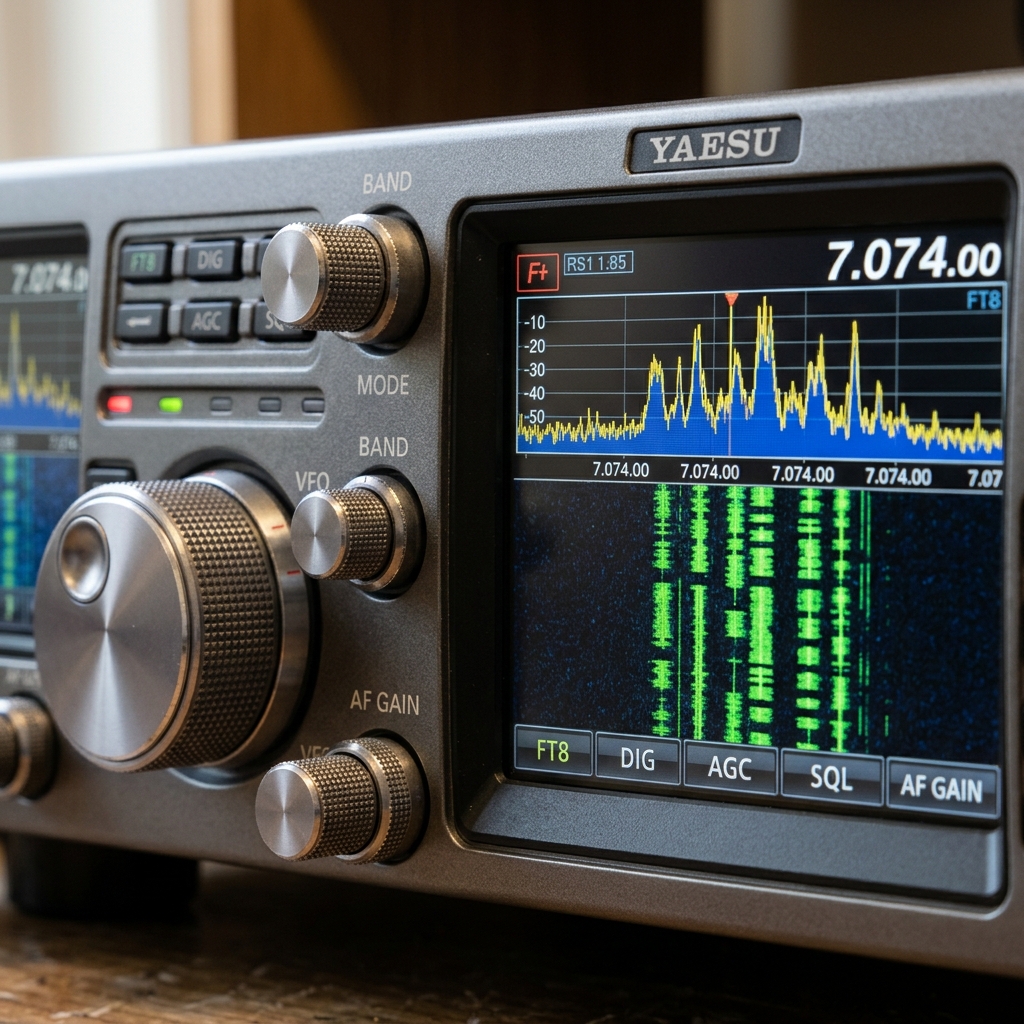
Amateur radio usually takes place in the shack, at home, surrounded by radios, antennas and all the equipment we have gradually collected over time. But what if we take the hobby somewhere completely different? Somewhere out in nature, away from the usual setup, with a portable radio station and a mountain summit as our operating location?
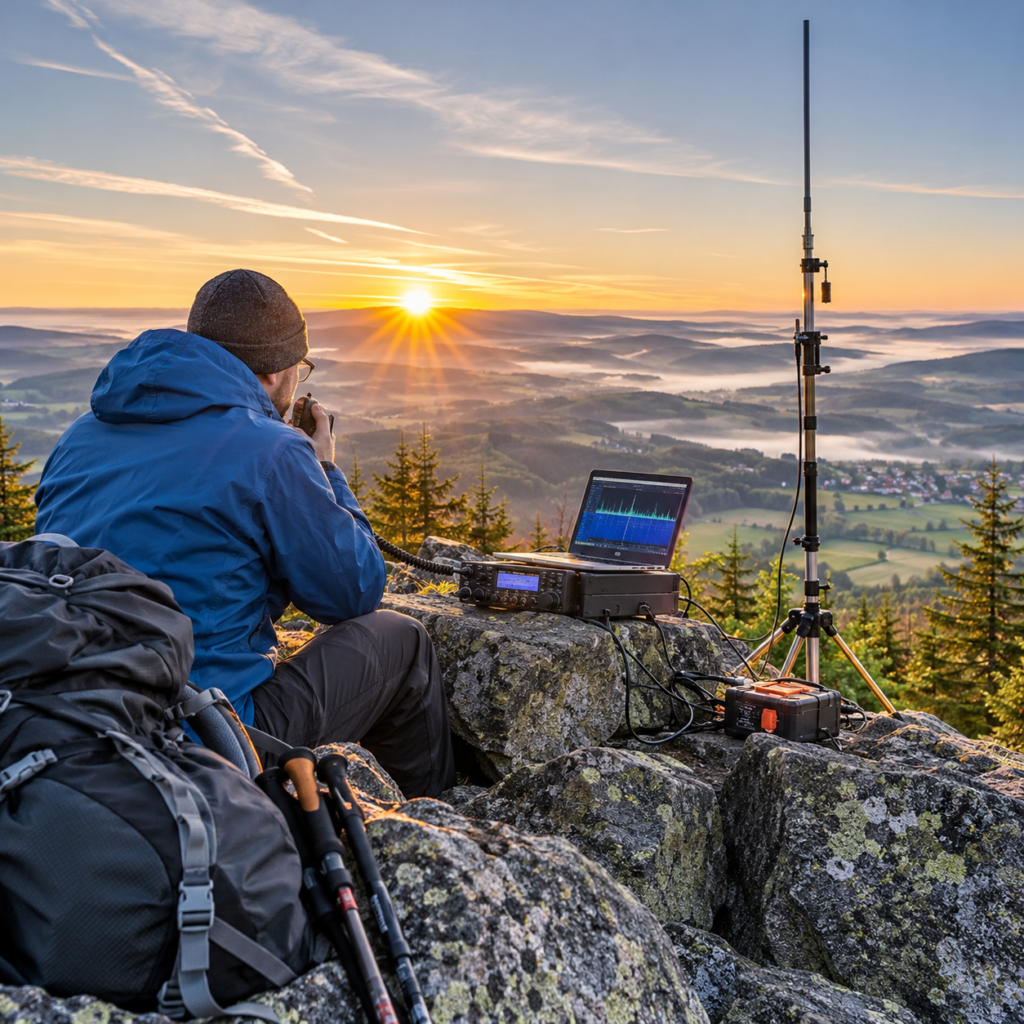
That is exactly what SOTA – Summits on the Air is all about.
I first came across the idea when a fellow amateur radio operator from Heppenheim asked me if I would like to join him for a SOTA activation. The idea immediately caught my attention. Combining amateur radio, hiking, technology and spending time with other HAM operators sounded like a great experience. And so, my first SOTA adventure began.
Before the event, I had quite a few question marks over my head. What is SOTA, how does it work, and what on earth do I need to take up a mountain? So I decided to combine my first-hand experience with a little beginner’s guide. After all, why should other newcomers have to figure everything out the hard way?
Let’s start with the basics!
What is SOTA?
SOTA stands for Summits on the Air. It is an international amateur radio activity programme that encourages radio amateurs to operate from designated mountain summits and hills.
The concept is simple: operators carry their radio equipment to an eligible summit, set up a portable station and make radio contacts from there.
SOTA brings together two groups of operators:
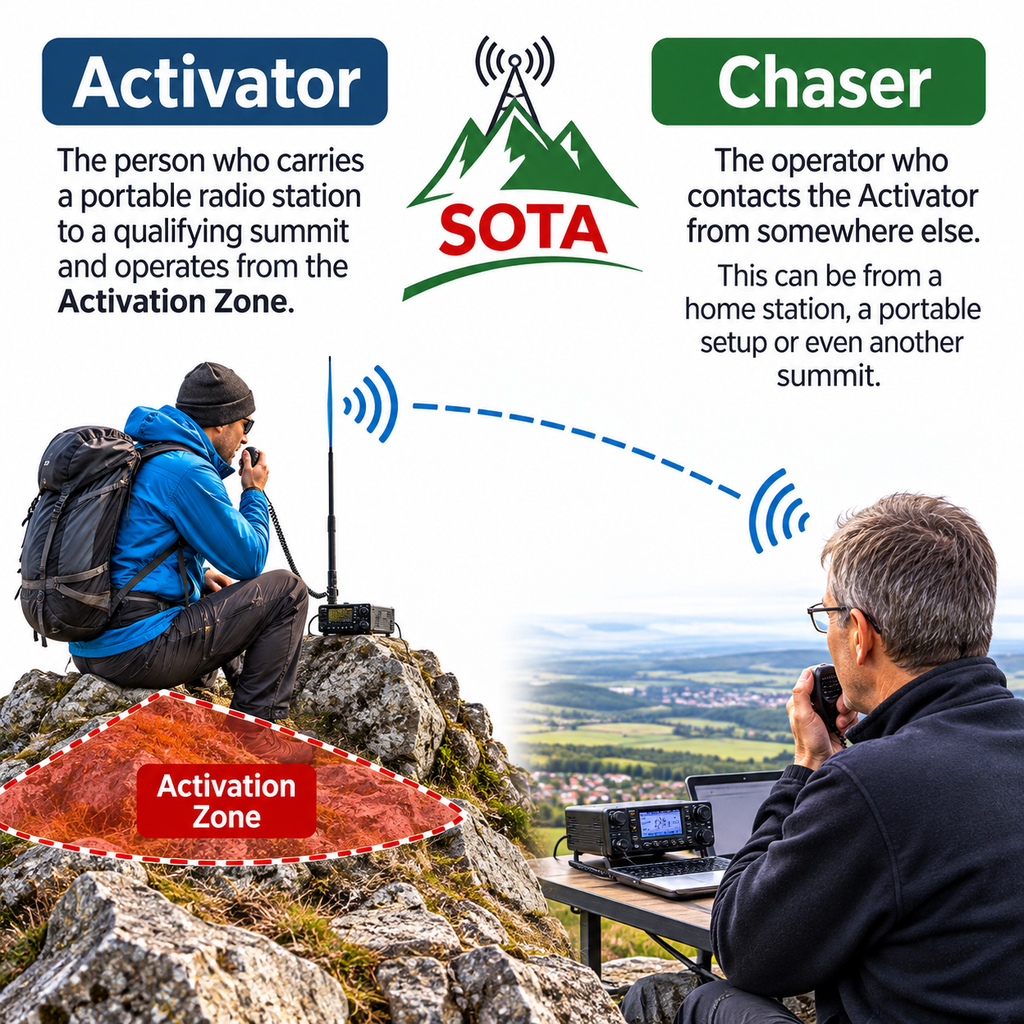
Both sides can collect points. Each eligible summit has its own reference and point value, depending on its elevation and classification.
It is a great way to discover new operating locations, improve portable radio skills and connect with other radio amateurs.
My first destination: Hardberg (DM/HE-057)
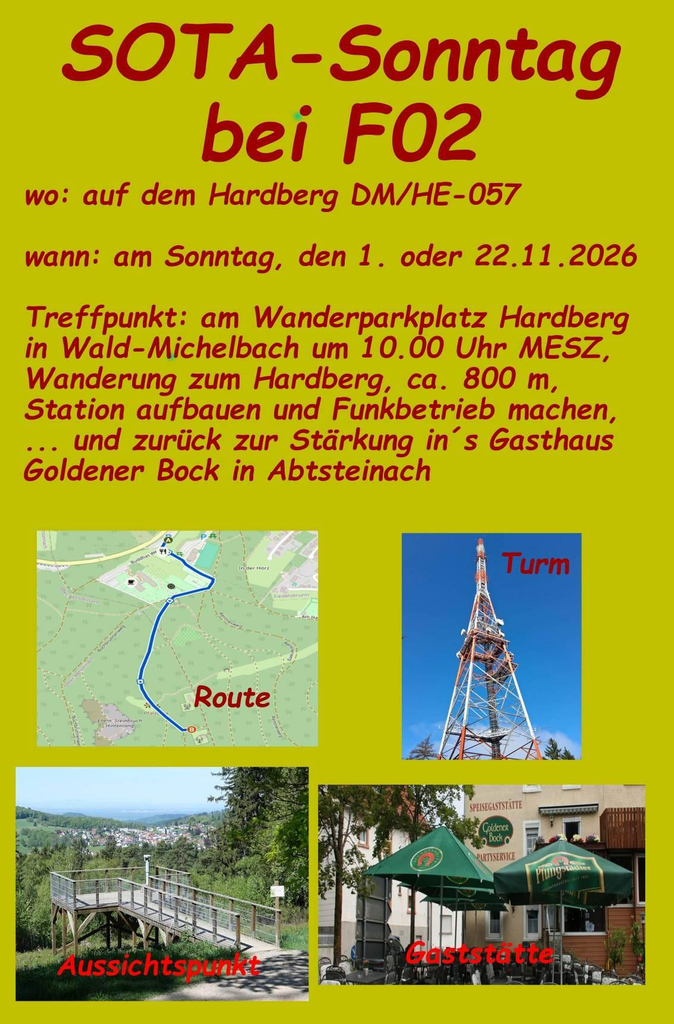
For my first SOTA outing, the destination was Hardberg near Wald-Michelbach in the Odenwald, Germany.
Its official SOTA reference is DM/HE-057.
The plan was to meet at the Hardberg hiking car park at 10:00 AM, hike approximately 800 metres to the summit, set up the radio station and start operating. Afterwards, we planned to head back down and enjoy some food together at the Gasthaus Goldener Bock in Abtsteinach.
What I particularly liked about the idea was that this was not just about making radio contacts. It was also about enjoying the outdoors and spending time with people who share the same hobby.
Getting ready for my first SOTA activation
Unlike operating from home, a portable activation requires a little more planning. Everything you need has to be carried to the summit.
For my first outing, I packed my mobile phone with qFT8 ready for digital operation. I also had access to a fellow operator’s radio equipment.
While preparing for the activation, I realised that there were quite a few things I wanted to understand before getting started. What exactly counts as a summit? Where am I allowed to operate? How many contacts do I need? And what happens afterwards with all those QSOs?
I have collected the questions I asked myself and answered them here. Perhaps they will help other newcomers who are just discovering SOTA.
SOTA – Questions I had before my first activation
Radio operation away from the shack
One of the things I find particularly interesting about SOTA is the freedom to choose how you operate.
You can use different bands and operating modes, depending on your equipment, licence privileges and the conditions at the summit.
For me, digital modes such as FT8 are particularly interesting. With qFT8 running on a mobile device, it is possible to operate digitally without needing a conventional desktop setup.
Of course, traditional voice operation is also an important part of SOTA. In fact, having several operators together makes it easy to experiment with different radios, antennas and operating techniques.
The big day – My first summit experience
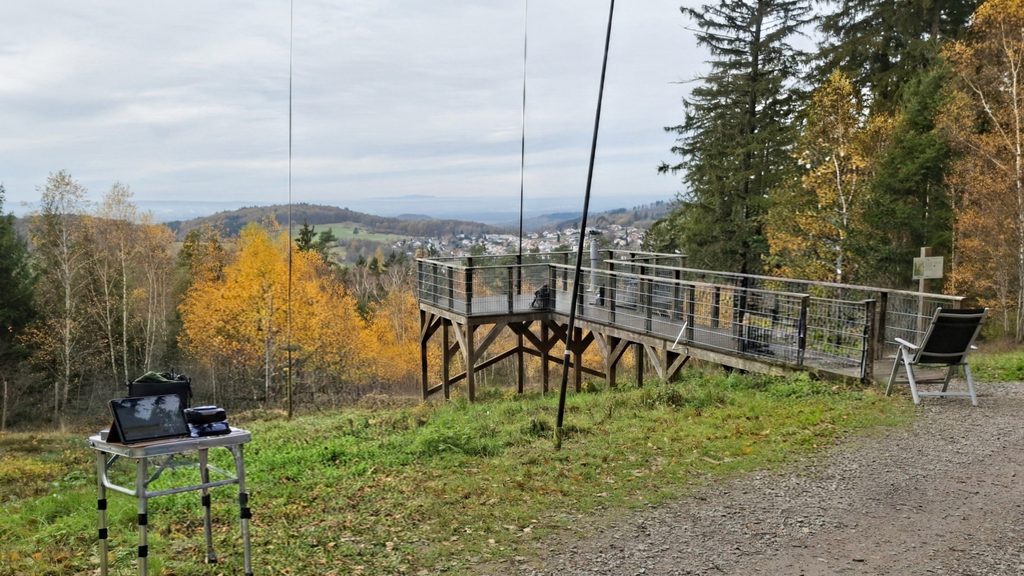
The day finally arrived. Together with the other operators, I was looking forward to getting out into nature, setting up the station and making my first contacts from a summit.
There is something special about operating amateur radio somewhere other than your usual shack. The equipment is reduced to the essentials, every item has to earn its place in your backpack, and suddenly the surroundings become part of the entire radio experience.
Instead of simply switching on a radio at home, you first have to get yourself and your equipment to the right place.
And that is part of the appeal.
Conclusion – Definitely not my last summit!
My first SOTA experience has shown me just how much more there is to amateur radio than operating from home.
It is a fantastic combination of technology, nature, adventure and community. You learn new things, challenge yourself and get to see the hobby from a completely different perspective.
I am already looking forward to the next summit, the next activation and hopefully many more QSOs from somewhere high above the everyday routine.
One thing is certain: This definitely won’t be my last SOTA activation!